
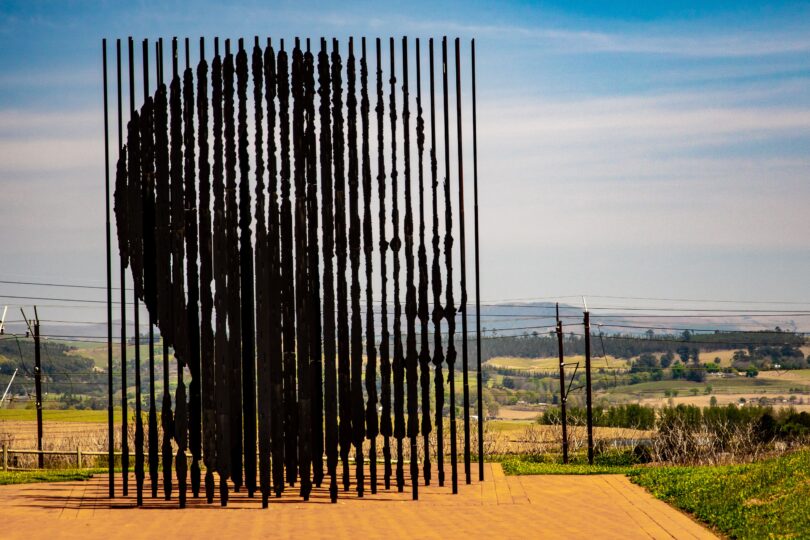
Studying At Nelson Mandela University
Nelson Mandela University is a prestigious academic institution in South Africa. Choosing the right university is one of the most critical decisions you will ever make as a scholar. If you are looking for an institution that blends world-class academic program standards and a strong commitment to social justice, Nelson Mandela University (NMU) stands out as an exceptional choice.
Located in the coastal city of Gqeberha (formerly Port Elizabeth), Nelson Mandela University is the only university in the world that carries the name of the iconic global leader, Nelson Mandela. This university is a dynamic hub for innovation, critical thinking, and career preparation. Whether you want to pursue a career in medicine, marine biology, engineering, or business, Nelson Mandela University offers comprehensive pathways to help you achieve your career goals.
This comprehensive, expert-compiled guide details everything you need to know about Nelson Mandela University. It details what you want to know from admission requirements and popular programs to student life and career opportunities in South Africa.
Synopsis of the Nelson Mandela University
Before we dive into the deep details of the university’s academic offerings and processes, here is a quick overview of what Nelson Mandela University represents:

- Location of the University is at Gqeberha (Port Elizabeth) and George, Eastern Cape, South Africa.
- The University has 7 distinct campuses (6 in Gqeberha, 1 in George).
- The student population is Over 30,000 diverse local and international students.
- The key academic focus is Comprehensive university offering vocational diplomas, professional degrees, and advanced postgraduate research.
- Signature Faculties: Home to South Africa’s 10th medical school, a prominent ocean sciences faculty, and top-tier business and engineering schools.
- The University Motto is “Change the World” — reflecting the legacy of Nelson Mandela.
Comprehensive Academic Structure
To cater to the diverse career aspirations of students in South Africa, Nelson Mandela University organizes its vast academic programs into seven dedicated faculties. Each faculty focuses on combining theoretical knowledge with practical skills.
Faculty of Health Sciences
This faculty is the pride of the Eastern Cape. It houses the groundbreaking Medical School based at Missionvale Campus, which aims to address the doctor-to-patient ratio in South Africa by training community-oriented medical professionals.
- The major program here include the Bachelor of Medicine and Bachelor of Surgery (MBChB), Bachelor of Nursing, Bachelor of Pharmacy (BPharm), Biokinetics, and Radiography.
- The focus is on Interprofessional education where medical, nursing, and pharmacy students train together in real-world clinic settings.
Faculty of Engineering, the Built Environment and Technology (EBEIT)
EBEIT provides future-ready educational program tracks to support the massive industrial zones in the Eastern Cape, such as the Coega IDZ.
- The major programmes are in BSc in Construction Studies, Bachelor of Engineering Technology (in Civil, Mechanical, or Electrical), and Information Technology (IT) diplomas.
- The University focus is on practical engineering solutions, sustainable architectural design, and modern software development practices.
Faculty of Business and Economic Sciences
As one of the largest faculties at Nelson Mandela University, this school produces business leaders, economists, and highly competent accountants.
- The major programs are BCom (Accounting, Economics, or Business Management), Diploma in Marketing, and Advanced Diploma in Financial Planning.
- The university focuses on financial literacy, corporate ethics, and entrepreneurial skills tailored for the South African economic environment.
Faculty of Science
With Gqeberha bordering the ocean and George nestled in rich forests, the Faculty of Science offers unique environmental studies.
- The major programmes are BSc in Environmental Sciences, BSc in Marine Biology, BSc in Chemistry, and Agricultural Sciences.
- The University focuses on climate change mitigation, conservation, and physical science innovation.
Faculty of Humanities
This faculty fosters critical thinking, cultural appreciation, and creative expression.
- The major programmes are Bachelor of Arts (BA) in Media and Communication, Bachelor of Visual Arts, and Bachelor of Music.
- The University focuses on Creative industry skills, social research, and language preservation.
Faculty of Education
Dedicated to training the next generation of educators who will shape the future of South African schools.
- The Major programmes include the Bachelor of Education (BEd) in Foundation Phase, Intermediate Phase, or Senior Phase/FET teaching.
- The University focuses on modern classroom management, multilingual teaching strategies, and psychological child development.
Faculty of Law
Highly respected for its rigorous mock trial training and community legal clinic work.
- The Major programmes include the Bachelor of Laws (LLB).
- The University focuses on Human rights law, commercial law, and constitutional litigation.
Admission Requirements at Nelson Mandela University
Getting into Nelson Mandela University requires a clear understanding of the National Senior Certificate (NSC) requirements and the university’s specific scoring system.
Unlike many South African institutions that use a generic Admission Point Score (APS), NMU uses a specialized Applicant Score (AS) system.
Understanding the Applicant Score (AS)
Your AS is calculated using your final Grade 11 or Grade 12 results (excluding Life Orientation, which is a 10-credit subject). The university looks closely at six key subjects:
- Home Language
- First Additional Language
- Mathematics, Mathematical Literacy, or Technical Mathematics
- Three other highest-scoring 20-credit subjects
The percentages you score in these six subjects are added together to give a total score out of 600.
Important Bonus Points: If you attend a school classified under Quintile 1, 2, or 3 (non-fee-paying schools) and score 50% or higher in Life Orientation, Nelson Mandela University will add 7 points to your total Applicant Score.
Admission Pathways Based on Qualification Type
The table below shows the minimum statutory requirements for different qualification levels at NMU:
The Application Procedure
The application window for the 2027 academic year opens on 13 April 2026. To ensure your application is successful, follow this step-by-step procedure:
Critical Application Closing Dates for 2027 Admission:
30 June 2026: Medical School (MBChB), Nursing, Pharmacy (BPharm), and Radiography (BRad) applications close.
03 August 2026: Early application deadline for all other undergraduate programs.
30 September 2026: Late application deadline, international student applications, and student housing (residence) applications close.
Exploring the Campus Network
Nelson Mandela University features a unique layout spanning seven campuses across two cities. Each campus has its own distinctive atmosphere and academic specialization:
Gqeberha (Port Elizabeth) Campuses
- South Campus (Summerstrand): The main administrative hub of the university. It houses the stunning university library, sports stadiums, and the faculties of Science, Law, and Business.
- North Campus (Summerstrand): Situated right next to South Campus. This campus is the center for engineering, technology, art, and design fields.
- Second Avenue Campus (Summerstrand): A business-focused campus housing the Nelson Mandela University Business School, known for its postgraduate and executive diplomas.
- Missionvale Campus: Located in the heart of the Missionvale community. This campus is home to the cutting-edge Medical School, showcasing the university’s commitment to community integration and healthcare development.
- Bird Street Campus: Located in the Central Business District (CBD), this heritage site houses postgraduate art programs and creative research units.
- Ocean Sciences Campus: A dedicated facility focusing on maritime studies, marine engineering, fisheries, and South Africa’s blue economy.
George Campus
- George Campus (Saasveld): Located at the foot of the Outeniqua Mountains in the Garden Route. This campus is famous for its forestry, agricultural management, nature conservation, and ecotourism programs. It is ideal for students who love nature and outdoor research.
Critical Skills Required for University Success
To thrive at Nelson Mandela University, prospective students need to cultivate specific soft and hard skills before arriving on campus:
- Critical Thinking and Analysis: University education goes beyond memorization. You must be able to analyze case studies, scientific data, and literature critically.
- Self-Discipline and Time Management: Unlike high school, lecturers will not follow up on your homework daily. Balancing social activities, beach visits, and tough study schedules requires immense self-regulation.
- Digital Literacy: From day one, you will use online portals like Moodle or Teams for lecture notes, research databases, and submitting assignments.
- Collaboration and Teamwork: Many engineering, business, and health science courses rely heavily on group projects and community outreach programs.
Career Opportunities for NMU Graduates in South Africa
Graduating from Nelson Mandela University opens up a vast world of employment opportunities in South Africa’s diverse industries. The table below highlights key study directions and their career paths:
Expert Tips for Choosing Your Program at NMU
- Calculate Your AS Correctly: Don’t guess your scores. Use the official NMU Applicant Score calculator online. Remember that excluding Life Orientation from your calculations is non-negotiable.
- Apply to Both a Degree and a Diploma: When filling out your online form, utilize your first and second choices strategically. If you apply for a highly competitive degree as your first choice, select a related diploma as your backup.
- Check Subject-Specific Requirements: Simply reaching the overall Applicant Score is not enough. For instance, a BSc in Computer Science might require an AS of 370, but it also strictly requires at least 60% (Level 5) in Mathematics.
- Prioritize Housing Early: Student accommodation fills up fast. Submit your housing application simultaneously with your academic application before the September deadline.
The Mistakes to Avoid During Your Application
- Submitting March Grade 12 Results: NMU only accepts final Grade 11 or your latest June/September Grade 12 results. March results will lead to immediate delay or rejection.
- Confusing Mathematics with Mathematical Literacy: Many courses in engineering and science strictly do not accept Mathematical Literacy. Applying for these courses with Math Lit will result in automatic rejection.
- Missing Key Deadlines: Medical, Nursing, and Pharmacy programs close much earlier than other courses (30 June). Do not wait until September to apply for these programs.
- Uploading Uncertified Documents: Ensure all copies of your ID and academic reports are certified by a Commissioner of Oaths or at a South African Police Service (SAPS) station before uploading.
Frequently Asked Questions on Nelson Mandela University
Does Nelson Mandela University accept NSFAS funding?
Yes, Nelson Mandela University is a public South African university. Qualified students can receive funding through the National Student Financial Aid Scheme (NSFAS), which covers tuition, accommodation, and learning material allowances.
What is the difference between APS and the Applicant Score (AS) at NMU?
While most South African universities use the APS (a scale from 1 to 7 per subject), NMU uses the Applicant Score (AS). The AS adds together the actual percentages you achieved in your six best subjects (excluding Life Orientation) to get a total score out of 600.
Can I apply to Nelson Mandela University with Mathematical Literacy?
Yes, you can apply with Mathematical Literacy, but only for specific programs in the Humanities, Education, and certain Business fields. Science, Engineering, and Health Science programs generally require pure Mathematics.
Where is the Nelson Mandela University Medical School located?
The NMU Medical School is located on the Missionvale Campus in Gqeberha. It features state-of-the-art anatomy labs and clinical simulator facilities.
What are the options if my Applicant Score is too low?
If you do not meet the direct entry requirements for a degree, you can look into Extended Degree Programs or Higher Certificates offered by NMU. These programs provide foundational support over an extra year to help you transition into your desired qualification.
Conclusion on Nelson Mandela University
Nelson Mandela University represents a perfect blend of high-caliber academics, societal impact, and an unforgettable coastal student lifestyle. By offering a diverse range of programs across its seven faculties, NMU equips South African youth with the knowledge and tools necessary to make a meaningful difference in the country.
To secure your spot, evaluate your current academic performance, compute your Applicant Score accurately, and submit your online application early. Take charge of your future today and join a community dedicated to carrying forward the legacy of Nelson Mandela.
YOU MAY ALSO LIKE THIS

[…] ReadHow to Apply and Study At Nelson Mandela University SuccessfullyPlugin developed by ProSEOBlogger. Get free gpl […]