
The Guide to Moi University: Courses and Student Life
Moi University is among the elite universities in Kenya. Selecting the right university is one of the most significant decisions you will make as a student. If you are looking for an institution that blends a rich academic heritage, diverse program options, and a vibrant student culture, Moi University stands out as a premier choice. Established as Kenya’s second public university, it has grown from a single faculty into a sprawling multi-campus institution that shapes the minds of thousands of local and international students every year.
For Kenyan students navigating the Kenya Universities and Colleges Central Placement Service (KUCCPS) selection is critical. This comprehensive guide provides everything you need to know about Moi University, including its academic programs, direct and parallel entry requirements, campus locations, fees, and career prospects.

Synopsis of the Moi University
Before diving into the detailed breakdown of schools and student life, here is a quick snapshot of what defines Moi University today:
- Established: 1984, by an Act of Parliament (Moi University Act), following the recommendations of the Mackay Commission.
- Main Campus Location: Kesses, located approximately 35 kilometers south-east of Eldoret town in Uasin Gishu County.
- Institution Type: Public University.
- Total Student Population: Over 30,000 across undergraduate, diploma, and postgraduate programs.
- Niche Areas: Pioneer in Environmental Studies, Aerospace Science, Information Sciences, and Textile Engineering in East Africa.
- Vice-Chancellor: Prof. Isaac Sanga Kosgey (as of 2026).
- Popular Acronym: MU.
- Motto: Foundation of Knowledge.
The History of Moi University
To appreciate the academic standing of Moi University, it helps to understand its unique roots. Founded in 1984 by Kenya’s second president, the late Daniel Toroitich arap Moi, the university was envisioned as a science, technology, and development-oriented institution.

Unlike the University of Nairobi, Moi University was deliberately placed in a rural setting (Kesses) to spur regional development and encourage practical, hands-on learning. It started with just one department, the Department of Forestry; transferred from the University of Nairobi. It incubated several institutional colleges that eventually matured into independent public universities. The colleges that have become fully fledged universities include: Maseno University, Narok University (now Maasai Mara University), and Eldoret University.
Today, it remains a powerhouse of innovation, hosting advanced medical training programs through its partnership with the Moi Teaching and Referral Hospital (MTRH) and driving industrial research via the Rivatex East Africa textile factory.
Location of the Moi University
Moi University operates a highly structured campus network designed to align specific academic disciplines with regional resources and infrastructure.
[Moi University Network]
   ├── Main Campus (Kesses) ── Engineering, Education, Arts, Sciences
   ├── College of Health Sciences (Eldoret Town) ── Medicine, Nursing, Dentistry
   ├── Eldoret Town Campus ── Business, Economics, Information Sciences
   └── Nairobi Campus ── Postgraduate & Executive Programs
Main Campus (Kesses)
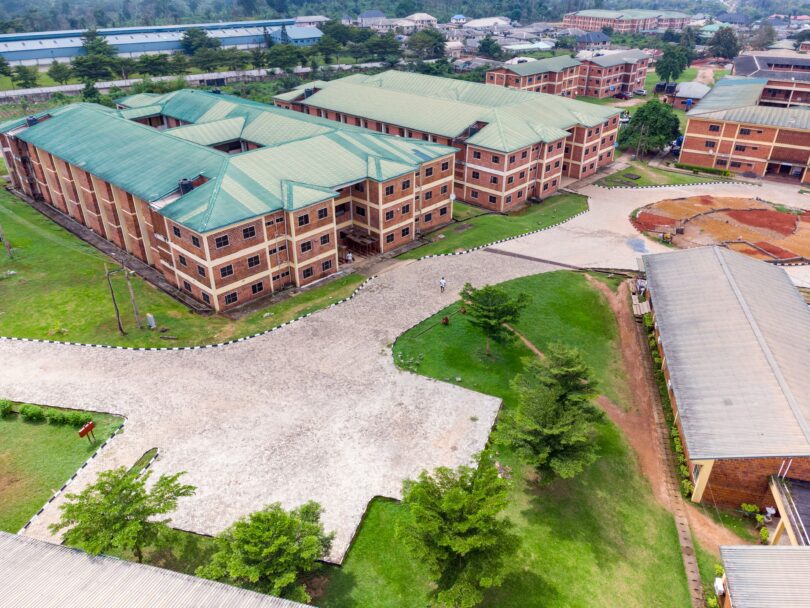
The heart of the institution, Main Campus sits on over 3,000 acres of land in Kesses, Eldoret. It provides a serene, distraction-free environment ideal for rigorous academic study. This campus houses the administrative block, the School of Education, the School of Engineering, the School of Arts and Social Sciences, and the School of Biological and Physical Sciences.
College of Health Sciences (Eldoret Town)
Located adjacent to the Moi Teaching and Referral Hospital (MTRH) within Eldoret town, this campus is a premier hub for medical training in East Africa. It hosts the School of Medicine, the School of Nursing, the School of Public Health, and the School of Dentistry. The proximity to a national referral hospital gives students instant access to clinical rotations and practical medical exposure.
Eldoret Town Campus
This campus caters primarily to students in the School of Business and Economics, the School of Information Sciences, and the School of Tourism, Hospitality, and Events Management. It is highly favored by part-time, evening, and weekend students working within the town.
Nairobi Campus
The Nairobi Campus operates from the central business district (Bazaar Plaza). It serves corporate professionals seeking executive master’s degrees, postgraduate diplomas, and flexible undergraduate business programs without relocating to Eldoret.
Comprehensive List of Schools and Courses Offered
Moi University offers a vast array of programs categorized across distinct schools. Below is a detailed breakdown of the major schools, the popular courses offered, and what makes each program unique.
School of Engineering
The School of Engineering at Moi University is highly respected across East Africa. It is known for its rigorous curriculum and practical approach to industrial problems. It is one of the few institutions that offers niche engineering specializations.
- Bachelor of Science in Civil Engineering: Focuses on structural, structural-geotechnical, transport, and water resources infrastructure.
- Bachelor of Science in Electrical and Electronic Engineering: Prepares students for sectors like power generation (KenGen, Kenya Power), telecommunications, and automation systems.
- Bachelor of Science in Mechanical and Production Engineering: Covers manufacturing systems, thermal fluids, and machine design.
- Bachelor of Science in Chemical and Process Engineering: Explores chemical manufacturing, mineral processing, and bio-systems.
- Bachelor of Science in Textile Engineering: Closely linked with Rivatex East Africa, offering unique hands-on experience in fabric and textile manufacturing processes.
School of Information Sciences (SIS)
Established in 1989, the School of Information Sciences is a pioneer in the field of information asset management in Africa. It bridges the gap between traditional media, computing, and administrative information systems.
- Bachelor of Science in Information Sciences: A highly versatile degree covering four major options: Information Technology, Records Management, Media Studies, and Library Studies.
- Bachelor of Science in Informatics: Blends computer science with data management and software systems, emphasizing how human systems interact with technology.
- Bachelor of Science in Graphic Communication and Advertising: Tailored for the creative economy, focusing on digital marketing, corporate branding, and visual media production.
- Bachelor of Science in Journalism and Mass Communication: Prepares students for dynamic roles in broadcasting, digital journalism, public relations, and corporate communications.
College of Health Sciences
This college operates as a highly integrated center for healthcare training, heavily emphasizing Problem-Based Learning (PBL) and Community-Based Education and Service (COBES).
- Bachelor of Medicine and Bachelor of Surgery (MBChB): A highly competitive 6-year program producing medical doctors equipped for global healthcare environments.
- Bachelor of Science in Nursing (BScN): Trains advanced practice nurses, midwifes, and community health managers.
- Bachelor of Dental Surgery (BDS): The second school in Kenya to offer specialized training in oral healthcare and dental surgery.
- Bachelor of Science in Physical Therapy: Focuses on rehabilitative medicine, sports injuries, and physical wellness therapies.
- Bachelor of Science in Environmental Health: Trains public health inspectors and health safety officers.
School of Business and Economics
As one of the largest schools by student enrollment, it drives corporate and entrepreneurial leadership training across its town and regional campuses.
- Bachelor of Commerce (BCom): Offers options in Accounting, Finance, Marketing, Insurance and Risk Management, and Human Resource Management.
- Bachelor of Science in Entrepreneurship Studies: Built for students looking to innovate, start ventures, or manage business incubators.
- Bachelor of Arts in Economics: Explores macro and microeconomic theories, econometrics, and public policy formulation.
- Bachelor of Science in Agricultural Economics and Resource Management: Focuses on the business side of agriculture, food value chains, and environmental resource economics.
School of Education
The School of Education is the institutional engine that has trained a vast majority of secondary school teachers, educational administrators, and curriculum specialists across East Africa.
- Bachelor of Education (Arts): Combines core education units with humanities subjects like History, Geography, Kiswahili, English, Literature, and Christian/Islamic Religious Education.
- Bachelor of Education (Science): Pairs education training with STEM fields such as Mathematics, Physics, Chemistry, and Biology.
- Bachelor of Education (Early Childhood and Primary Education): Focuses on foundational learning systems, child psychology, and primary school curriculum management.
- Bachelor of Education in Guidance and Counseling: Prepares psychological counselors for institutional settings.
School of Arts and Social Sciences (SASS)
This school handles the core humanistic, social, and cultural studies essential for governance, community development, and international relations.
- Bachelor of Arts in Criminology and Criminal Justice: Highly sought after by professionals entering the national police service, military, private security firms, and correctional systems.
- Bachelor of Arts in Community Development: Prepares social workers and NGO project managers to tackle community projects.
- Bachelor of Arts in Kiswahili / English / Linguistics: Deep dives into language structures, creative writing, and translation competencies.
- Bachelor of Arts in Political Science and Public Administration: Focuses on governance frameworks, public sector management, and geopolitical structures.
Direct and Parallel Admission at Moi University
Gaining admission into Moi University requires meeting specific criteria set by the university senate and aligned with the Kenya National Qualifications Authority (KNQA) guidelines. Admissions are split into Government-Sponsored Students (placed via KUCCPS) and Self-Sponsored Students (Parallel Track).
The Depth of Specific Competitive Course Requirements
Getting a generic C+ guarantees entry into the university, but highly specialized faculties enforce strict minimum subject requirements:
- Medicine (MBChB): Minimum of B (Plain) in core cluster subjects: Biology, Chemistry, Physics/Mathematics, and English/Kiswahili. The overall aggregate score must also remain high due to competitive quotas.
- Engineering (BSc): Minimum of C+ (Plus) in Mathematics, Physics, Chemistry, and English. A strong performance in these foundational sciences is non-negotiable for registration with the Engineers Board of Kenya (EBK).
- Information Sciences / Informatics: Minimum of C+ (Plus) in Mathematics and English/Kiswahili.
- Law (LLB): A minimum grade of B (Plain) in English or Kiswahili is required by the Council of Legal Education (CLE).
Fees Structure and Scholarships
Financing your education at Moi University depends heavily on your entry track. Under the Higher Education Funding Model introduced by the Kenyan government, government-sponsored students are funded based on their financial need assessment (categorized into vulnerable, extremely needy, needy, and less needy).
Estimated Costs for Government-Sponsored vs. Parallel Track Students
- Government-Sponsored Undergraduates: Tuition fees generally range from KES 16,000 to KES 50,000 per academic year, depending on the funding category determined by the Higher Education Financing (HEF) portal. This excludes accommodation, meals, and statutory fees.
- Self-Sponsored (Parallel Track) Undergraduates: Humanities and Arts courses range from KES 120,000 to KES 150,000 per year. Specialized programs like Engineering cost between KES 200,000 and KES 300,000 per year, while Medicine remains the highest at over KES 400,000 per academic year.
Financial Mobilization Resources for Students
Pro Tip: Never drop out of university due to lack of school fees. Explore these structured avenues immediately upon receiving your admission letter:
- HEF / HELB: Apply via the Higher Education Financing portal (www.hef.co.ke) as soon as the window opens. This provides both scholarships and Higher Education Loans Board (HELB) loans directly tied to your tuition and upkeep.
- County Government Bursaries: Every county in Kenya offers annual bursary allocations through the office of the Governor or the Ward Development Fund. Visit your local sub-county headquarters to grab application forms.
- NG-CDF Bursaries: The National Government Constituencies Development Fund allocates a substantial portion of its resources to support university students. Reach out to your Member of Parliament’s constituency office.
- Moi University Work-Study Program: The Dean of Students office regularly opens work-study opportunities for extremely needy students. These positions allow you to work part-time within the university libraries, farms, or administrative offices to cover food and accommodation costs.
Essential Skills for Academic Success at University
Graduating with a top-tier degree from Moi University requires more than just high performance in high school. The unstructured environment of university life demands a distinct evolutionary shift in your skill set:
- Self-Directed Research: Lecturers provide course outlines, not comprehensive notes. You must master the use of the Margaret Thatcher Library databases, Google Scholar, and institutional repositories to construct your term papers.
- Time Management & Autonomy: With no high school teachers checking your morning attendance, the ability to balance lectures, personal study, continuous assessment tests (CATs), and social activities rests entirely on your shoulders.
- Technical Literacy: Whether you are studying Education or Engineering, you will need to utilize modern productivity software, learning management platforms (Moodle), reference management software (Mendley or Zotero), and data analysis tools like SPSS or R.
- Collaboration and Teamwork: A significant portion of university grading relies on group assignments. Developing emotional intelligence, communication skills, and the ability to work within diverse groups is essential.
Career Opportunities of Moi University Graduates
Moi University is a competitive and respectable academic institution in the region. Employers in Kenya hold Moi University graduates in high regard due to the practical, community-centered nature of their coursework. Below is a breakdown of potential career paths available to graduates across different sectors:
Technology, Data, and Corporate Media
Graduates from the School of Information Sciences and informatics tracks secure high-level roles as:
- Data Analysts and Database Administrators
- Systems Analysts and IT Consultants
- Journalists, News Editors, and Content Producers
- Corporate Communications Directors and PR Strategists
Engineering and Industrial Manufacturing
The heavy focus on real-world application equips engineering graduates to excel within:
-
Civil Infrastructure: Roles in structural firms, KeNHA, KURA, and county engineering departments.
-
Energy Sector: Employment within KenGen, Geothermal Development Company (GDC), and solar installation enterprises.
-
Textile Processing: Specialized management tracks at Rivatex, EPZ firms, and fast-moving consumer goods (FMCG) manufacturing spaces.
Medical, Public Health, and Research Facilities
The College of Health Sciences creates immediate human resource talent for:
- Public and Private Hospitals (MTRH, Kenyatta National Hospital, Aga Khan University Hospital)
- Global Research Organizations (KEMRI, CDC, AMPATH)
- Non-Governmental Organizations focused on maternal health, sanitation, and nutritional intervention.
Education and Public Sector Policy
The School of Education and SASS graduates feed directly into:
- Teachers Service Commission (TSC) secondary school and college placements
- The Public Service Commission (PSC) as administrative officers, policy analysts, and county administrators
- Non-governmental peacebuilding, human rights, and advocacy bodies
Average Salary Expectations for Graduates in Kenya
Entry-level salaries in Kenya vary wildly based on industry specialization, the size of the employing organization, and professional certifications. Here is a realistic overview of entry-level salary ranges for popular career tracks:
Expert Tips for Selecting the Right Program at Moi University
Selecting a degree program shouldn’t be a game of chance. Keep these expert strategies in mind before filling out your university placement choices:
- Align Passion with Cluster Trends: Do not choose a course purely because it sounds prestigious. Check your performance in individual cluster subjects. If you struggled with physics in high school, entering a mechanical engineering track will prove incredibly stressful.
- Prioritize Professional Body Accreditation: Before enrolling in any technical program, confirm that the course is fully accredited by relevant statutory organs. For example, ensure the School of Law is cleared by the CLE, and Engineering programs are fully recognized by the EBK. Moi University maintains strong compliance, but verifying current status protects your career line.
- Factor in Campus Locations: Remember that different schools operate from different campuses. If you enjoy a bustling urban lifestyle, the Eldoret Town campus fits perfectly. If you prefer peaceful landscapes with ample personal space, the Main Campus at Kesses is ideal.
- Invest Early in Professional Certifications: If you pursue a Bachelor of Commerce, start your CPA or CFA papers in your first year. If you study IT or Informatics, gather CCNA, AWS, or Azure cloud certifications alongside your degree. A degree gets you the interview; professional certs secure the job.
Common Mistakes Students Make During Their Time at University
University life introduces vast freedoms that can easily derail a student’s academic path if not managed carefully. Avoid these common pitfalls:
- Missing Continuous Assessment Tests (CATs): At Moi University, CATs and assignments account for 30% to 40% of your final semester grade, with the main exam accounting for the rest. Skipping CATs means failing the course entirely, leading to painful academic retakes.
- Neglecting the Clearance of Missing Marks Early: Always crosscheck your student portal at the end of every semester to ensure all your marks are accurately captured. If a grade is missing, follow up with the school department immediately. Waiting until your graduation year to resolve a first-year missing mark can delay your graduation by years.
- Ignoring Networking and Extracurricular Associations: Spending four years solely walking between the hostel and the lecture hall is a missed opportunity. Join professional student bodies (like the Moi University Students Organization – MUSO, or specific school clubs), participate in sports, and build relationships with your professors. These contacts often provide your first job leads.
- Poor Financial Budgeting: Receiving a large HELB loan disbursement at the beginning of the semester can create a false sense of financial security. Many students squander this money in the first month, leaving them struggling for food and accommodation during the critical exam periods.
Frequently Asked Questions on Moi University
Where is the main campus of Moi University located?
The Main Campus of Moi University is located in Kesses, approximately 35 kilometers south-east of Eldoret town in Uasin Gishu County, Kenya. It is accessible via the Eldoret-Nakuru highway, branching off at the Kesses junction.
How can I apply for self-sponsored programs at Moi University?
You can apply directly online through the Moi University admissions portal (admissions.mu.ac.ke). You will be required to fill out your academic details, upload your KCSE result slip, and pay a non-refundable application fee. The payment can be done through the designated bank accounts or corporate M-Pesa paybill numbers listed on the portal.
What is the minimum grade required to study law at Moi University?
To be admitted into the Bachelor of Laws (LLB) program at Moi University, you must possess a minimum KCSE mean grade of C+ (Plus). Additionally, you must have an exceptional command of languages, specifically attaining a minimum grade of B (Plain) in either English or Kiswahili.
Does Moi University offer accommodation inside the campus?
Yes, Moi University offers extensive and highly affordable on-campus hostel accommodation for undergraduate students at the Main Campus. Spaces are allocated on a first-come, first-served basis through the online room booking system. Alternative, high-quality private hostels are widely available in the immediate surrounding student centers like Stage and Kesses.
Are the engineering courses at Moi University accredited by EBK?
Yes, the core engineering programs offered at Moi University, including Civil, Mechanical, Electrical, Chemical, and Textile Engineering are fully recognized and accredited by the Engineers Board of Kenya (EBK). The university continuously reviews its curricula to align with global engineering practice standards.
Can I transfer from another university to Moi University?
Yes, credit transfers and inter-university transfers are permissible, provided you meet the required cut-off clusters for the program you wish to join and there are vacant slots available. This process must be formally initiated and approved through the KUCCPS portal during the open transfer windows.
Conclusion on Mois University
Moi University remains an iconic lighthouse of higher education in Kenya, offering a robust foundation for anyone ready to invest in their future. Its distinct combination of practical academic models, strong industry alignment, and a transformative student experience ensures that its graduates emerge as highly capable, market-ready professionals.
As you plan your next major academic step, take the time to evaluate the entry criteria carefully, select a course that fits your natural skills, and budget for the path ahead. Approach your university years with clarity, discipline, and curiosity, and you will set yourself up for lasting career success.
YOU MAY ALSO LIKE THIS
- The Ultimate Guide to the Kisii University Student Portal: Sign In, Course Registration, and Academic Life
- Chuka University Student Portal: The Ultimate Guide to Academic Excellence, Campus Life, and Digital Learning in Kenya
- The Ultimate Guide to KCA University: Academic Excellence, Campus Life, and 2026/2027 Opportunities for African Youth


[…] ReadUltimate Guide to Moi University: Courses, Admission Requirements, Campuses, and Student LifePlugin developed by ProSEOBlogger. Get free gpl […]
[…] ReadUltimate Guide to Moi University: Courses, Admission Requirements, Campuses, and Student LifePlugin developed by ProSEOBlogger. Get free gpl […]
[…] Ultimate Guide to Moi University: Courses, Admission Requirements, Campuses, and Student Life […]