
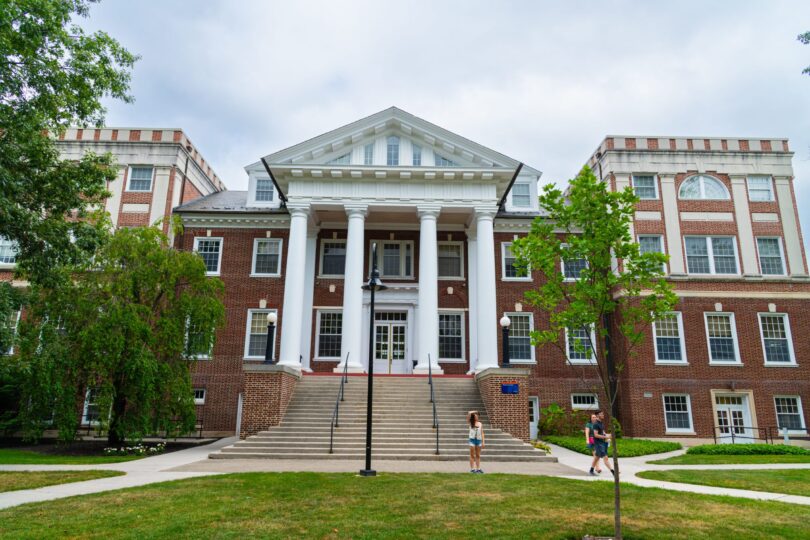
Yorkville University: Comprehensive Guide to Programs, and Career Pathways in Canada
Yorkville University is one of the best universities in Canada, attracting international students. Navigating higher education options in Canada requires balancing program quality, accreditation, and clear career outcomes. Yorkville University has established itself as one of Canada’s largest private, degree-granting universities, serving thousands of domestic and international students across online platforms and on-campus locations. Whether you are looking to enter project management, behavioral psychology, interior design, or creative arts, understanding how Yorkville University structures its degrees, admissions, and industry pathways is essential for making an informed academic investment.
This comprehensive guide delivers an objective, detailed breakdown of Yorkville University. It explores undergraduate and graduate program offerings, transparent admission criteria for Canadian and international applicants, tuition models, credit transfer policies, and post-graduation career opportunities in Canada’s evolving job market.

Synopsis of Yorkville University
For prospective students seeking a quick evaluation of the institution’s core features, here is a structured summary:
Institution Type: Private, Canadian degree-granting university established in 2003 under the provincial authority of New Brunswick.
Campus Locations:
Ontario: Downtown Toronto (programs offered through regulatory consent from the Ontario Ministry of Colleges and Universities).
British Columbia: Vancouver / New Westminster (programs offered under the consent of the BC Ministry of Post-Secondary Education and Future Skills).
New Brunswick: Fredericton (central administrative home and original degree-granting charter).
Affiliated Institution: Toronto Film School (creative diploma programs with seamless articulation pathways into Yorkville degrees).
Delivery Formats: 100% asynchronous online, fully on-campus, and blended/hybrid formats tailored for working professionals.
Intake Cycles: Year-round quarterly intakes (January, April, July, October), eliminating rigid annual application deadlocks.
Accelerated Model: Continuous year-round study options allowing undergraduate students to complete four-year Bachelor’s degrees in 2.5 to 3 years.
International Eligibility: On-campus programs in Vancouver and Toronto generally meet designated learning institution (DLI) criteria, enabling eligible international graduates to apply for Canada’s Post-Graduation Work Permit (PGWP), subject to Immigration, Refugees and Citizenship Canada (IRCC) regulations.

Institutional Background, Accreditation, and Governance
Understanding institutional accountability is fundamental when selecting a Canadian post-secondary institution. In Canada, education is provincially regulated rather than managed by a federal ministry.
Provincial Regulatory Approvals
  │
  ├── New Brunswick: Department of Post-Secondary Education, Training and Labour (Maritime Provinces Higher Education Commission - MPHEC)
  ├── Ontario: Ministry of Colleges and Universities (Postsecondary Education Quality Assessment Board - PEQAB)
  └── British Columbia: Ministry of Post-Secondary Education and Future Skills (Degree Quality Assessment Board - DQAB)
Yorkville University operates under the strict ministerial consent frameworks of each province where it delivers programming:
Provincial Ministerial Consent
New Brunswick: Established under the Degree Granting Act, Yorkville University received ministerial consent in 2003 to offer its foundational graduate degrees, including the Master of Arts in Counselling Psychology (MACP) and Master of Education (MEd). Quality benchmarks are periodically reviewed in conjunction with the Maritime Provinces Higher Education Commission (MPHEC).
Ontario: In Ontario, degree programs such as the Bachelor of Business Administration (BBA) and the Bachelor of Creative Arts (BCA) operate under the consent of the Minister of Colleges and Universities, following rigorous evaluations by the Postsecondary Education Quality Assessment Board (PEQAB).
British Columbia: Programs offered through the Vancouver campus undergo quality assessment via the Degree Quality Assessment Board (DQAB) to obtain ministerial consent under the Degree Authorization Act.
Difference Between Public and Private Universities in Canada
A common point of inquiry for applicants is the distinction between public universities and private degree-granting universities like Yorkville University:
| Feature | Canadian Public Universities | Yorkville University |
| Funding Model | Heavily subsidized by provincial tax revenues and government grants. | Privately held and tuition-funded; receives no direct provincial operating subsidies. |
| Class Sizes | Often large lecture halls (150–500 students in early years). | Small cohort models (typically 15–25 students per class). |
| Academic Scheduling | Traditional two-semester terms (September to April), with optional summer sessions. | Continuous, quarterly year-round terms (accelerated progression possible). |
| Delivery Model | Historically campus-centric, though online components are expanding. | Built from the ground up for online, hybrid, and flexible adult learning. |
| Transfer Credit Flexibility | Strict, often bureaucratic credit-transfer articulation protocols. | Highly structured, proactive credit recognition for prior college diplomas and military service. |
Detailed Academic Degree Programs Offered
Yorkville University specializes in practitioner-focused degrees designed to bridge theoretical academic foundations with workplace execution. Rather than offering broad, purely theoretical liberal arts programs, degree tracks target specific, high-demand industry sectors.
Yorkville University Program Structure
  │
  ├── Faculty of Behavioural Sciences
  │     ├── Master of Arts in Counselling Psychology (MACP)
  │     └── Doctor of Counselling and Psychotherapy (DCP)
  │
  ├── Faculty of Education
  │     ├── Master of Education in Adult Education (M.Ed)
  │     └── Master of Education in Educational Leadership (M.Ed)
  │
  └── Faculty of Business & Creative Arts
        ├── Bachelor of Business Administration (BBA)
        │     ├── General BBA
        │     ├── Accounting
        │     ├── Project Management
        │     ├── Supply Chain Management
        │     └── Energy Management
        ├── Bachelor of Interior Design (BID)
        └── Bachelor of Creative Arts (BCA)
1. Faculty of Behavioural Sciences
Master of Arts in Counselling Psychology (MACP)
The MACP is Yorkville University’s flagship graduate program, designed to prepare graduates for clinical mental health practice across Canada.
Delivery: Fully online course components combined with a mandatory 400-hour field practicum (direct and indirect client hours under a qualified supervisor).
Curriculum Focus: Psychopathology, ethical foundations, biopsychosocial assessment, counseling theories, group therapy, family systems, and culturally responsive practice.
Professional Alignment: Structured to meet the academic credential requirements for registration with provincial bodies, including the College of Registered Psychotherapists of Ontario (CRPO) and the Canadian Counselling and Psychotherapy Association (CCPA) for the Canadian Certified Counsellor (CCC) designation.
Doctor of Counselling and Psychotherapy (DCP)
A terminal professional doctorate designed for practicing counselors, psychotherapists, and mental health clinicians aiming for clinical leadership, teaching, and applied research roles.
Delivery: Online, cohort-based model emphasizing applied clinical inquiry, program evaluation, supervision models, and clinical systems leadership.
2. Faculty of Education
Master of Education (M.Ed)
Yorkville’s graduate education programs cater to certified K-12 teachers looking to advance on provincial salary grids, as well as corporate training directors and adult educators.
Specialization in Educational Leadership: Focuses on school administration, institutional policy, organizational dynamics, leadership ethics, and curriculum change management.
Specialization in Adult Education: Focuses on instructional design, andragogy, workplace training development, digital learning environments, and higher education teaching.
3. Faculty of Business and Creative Arts
Bachelor of Business Administration (BBA)
Offered across online, Toronto, and Vancouver campuses, the BBA is structured to provide foundational corporate literacy while allowing students to drill down into specialized competencies:
Project Management Specialization: Aligned with the Project Management Institute (PMI) Project Management Body of Knowledge (PMBOK), fulfilling educational prerequisites for the PMP (Project Management Professional) and CAPM credentials.
Accounting Specialization: Maps curriculum components directly to the prerequisite education requirements set by the Chartered Professional Accountants (CPA) of Canada.
Supply Chain Management Specialization: Equips learners with logistics, procurement, vendor risk analysis, and global supply network design strategies.
Energy Management Specialization: Focuses on sustainability metrics, environmental policy, alternative fuel adoption, and utility resource auditing.
Bachelor of Interior Design (BID)
Delivered online and through the Ontario campus, the BID is a professionally focused, Council for Interior Design Accreditation (CIDA) accredited program.
Curriculum: Space planning, building codes, sustainable architecture, technical drafting, material specification, 3D rendering (Revit, AutoCAD), and ergonomics.
Career Preparation: Aligns with qualification requirements for the National Council for Interior Design Qualification (NCIDQ) examination and provincial associations (such as ARIDO in Ontario).
Bachelor of Creative Arts (BCA)
Designed specifically as a degree-completion program for holders of relevant creative arts diplomas (e.g., from Toronto Film School, public colleges, or international arts academies).
Focus: Creative entrepreneurship, IP law, production financing, media management, distribution models, and leadership in creative industries.
Admissions Criteria and Application Requirements
Admissions policies at Yorkville University balance access with academic preparedness. Clear academic criteria exist for both domestic and international applicant pools.
Application Workflow
  [Online Application Submission]
            │
  [Official Transcripts Upload]
            │
  [Document Verification / WES Assessment (if applicable)]
            │
  [Language Proficiency Verification (IELTS/TOEFL/Duolingo)]
            │
  [Faculty Review (SOP/CV for Graduate Programs)]
            │
  [Letter of Acceptance (LOA) Issued]
            │
  [Fee Deposit & Course Registration]
Undergraduate Admissions (BBA, BID, BCA)
Canadian High School Applicants:
Completion of a Canadian secondary school diploma (Grade 12) or equivalent provincial high school graduation credential.
A minimum overall competitive average (typically 65% or higher across required academic subjects, including Grade 12 English and secondary mathematics).
College Transfer / Mature Applicants:
Applicants aged 21 or older who do not meet traditional secondary requirements may apply under mature student status, presenting personal profiles, resumes, and relevant life or professional experience.
Diploma holders from recognized Canadian community colleges (e.g., Seneca, Humber, George Brown, BCIT, Douglas College) may transfer eligible course blocks directly.
Graduate Admissions (MACP, M.Ed, DCP)
Master of Arts in Counselling Psychology (MACP):
Degree Requirement: A recognized four-year undergraduate bachelor’s degree from an accredited university.
GPA Threshold: A minimum cumulative GPA of 3.0 on a 4.0 or 4.33 scale (equivalent to mid-B or ~73–76%) in undergraduate study.
Prerequisite Coursework: Completion of undergraduate courses in introductory psychology and either developmental psychology or abnormal psychology/human development with a minimum grade of “B”.
Supplementary Documentation:
Official academic transcripts from all post-secondary institutions attended.
A detailed Statement of Intent / Admissions Essay outlining clinical motivations, professional goals, and ethical preparedness.
A comprehensive Curriculum Vitae (CV) demonstrating relevant work, volunteer, or human service experience.
Two professional or academic letters of recommendation evaluating suitability for clinical training.
Master of Education (M.Ed):
An accredited undergraduate degree with a minimum 3.0 GPA.
Relevant professional experience in formal school boards, early childhood environments, post-secondary administration, or corporate instructional design.
Detailed resume and personal statement of research/application intent.
International Student Requirements
To maintain regulatory compliance and academic standards, international students must submit verified documentation and satisfy strict language requirements.
Credential Assessment:
Academic transcripts from institutions outside Canada or the United States must be accompanied by certified English translations and, in many cases, evaluated by an approved credential agency such as World Education Services (WES) or the International Credential Assessment Service of Canada (ICAS).
English Language Proficiency (ELP) Minimum Standards:
Applicants whose primary language is not English, or who have completed their education in a non-English instructional environment, must achieve the following minimum benchmark scores:
| Test System | Undergraduate (BBA, BID) | Graduate (MACP, M.Ed) |
| IELTS Academic | 6.0 overall (no band lower than 5.5) | 6.5 to 7.0 overall (minimum 6.5 in writing) |
| TOEFL iBT | 80 overall (minimum 20 in each section) | 90 to 92 overall (minimum 22 in writing) |
| Duolingo English Test (DET) | 105 – 110 | 115 – 120 |
| PTE Academic | 55 overall | 60 – 65 overall |
Note: Conditional admission via University Pathway / English as a Second Language (ESL) partner programs is frequently offered to applicants who meet academic standards but fall slightly below ELP benchmarks.
Skills Acquired Through Degree Programs
Programs at Yorkville University are engineered around practical applied learning outcomes. Students cultivate distinct hard and soft skills mapped directly to professional designations and employer expectations:
Core Competencies Developed
  ├── Project Management: Earned Value Analysis, Critical Path Scheduling, Agile Scrum, Risk Matrix Assessment
  ├── Accounting & Finance: GAAP/IFRS Compliance, Forensic Auditing, Corporate Tax Strategy, Managerial Accounting
  ├── Mental Health & Clinical Work: DSM-5-TR Differential Diagnostics, Therapeutic Alliance, Crisis De-escalation, Case Conceptualization
  ├── Interior Design: CIDA Technical Codes, Revit 3D Modeling, Biophilic Planning, Spec writing
  └── Executive Leadership: Change Management, Quantitative Policy Evaluation, Conflict Resolution, Andragogy Design
Analytical and Technical Competencies
Earned Value Management and Risk Allocation: Business students mastering project management learn how to calculate Schedule Performance Indices (SPI) and Cost Performance Indices (CPI), utilizing enterprise software to forecast delivery variances.
Clinical Formulation and Psychodiagnostics: MACP students are trained to conceptualize client distress across psychodynamic, cognitive-behavioral (CBT), narrative, and systemic modalities while consulting the DSM-5-TR for accurate assessment and ethical treatment plans.
Parametric Architectural Drafting: Interior design students gain hands-on proficiency in building information modeling (BIM), coordinating lighting calculation layouts, spatial accessibility rules (ADA/AODA standards), and acoustic insulation metrics.
Professional and Interpersonal Soft Skills
Ethical Dilemma Resolution: Navigating complex legalities, client confidentiality, and institutional compliance standards under Canadian common law and professional codes of conduct.
Cross-Cultural Communication: Collaborating in virtual, cross-functional project teams with peers from diverse international, economic, and operational backgrounds.
Self-Reflective Practice: Critical self-assessment required in both counseling psychodynamics and executive leadership to manage bias, avoid professional burnout, and maintain professional objectivity.
Career Opportunities and Industry Pathways in Canada
Graduating with a degree from Yorkville University unlocks varied professional pathways across Canadian commerce, social services, and creative industries.
Career Pathways by Sector
  │
  ├── Business & Technology
  │     ├── Operations Director / Supply Chain Specialist
  │     ├── Certified Project Manager (PMP/CAPM)
  │     └── Financial Analyst / Junior Corporate Accountant
  │
  ├── Mental Health & Social Infrastructure
  │     ├── Registered Psychotherapist (RP - Ontario)
  │     ├── Canadian Certified Counsellor (CCC)
  │     └── Clinical Program Coordinator / Substance Use Counselor
  │
  └── Education & Built Environment
        ├── Corporate Director of Learning & Development (L&D)
        ├── NCIDQ Certified Commercial/Residential Interior Designer
        └── Academic Dean / K-12 Department Head (with provincial teaching cert)
Employment Landscapes by Degree Specialization
1. Business Administration and Project Management
Canada’s economy relies heavily on project managers across construction, banking, healthcare infrastructure, and software engineering.
Sample Job Titles: Project Coordinator, Operations Manager, Scrum Master, Business Systems Analyst, Supply Chain Planner, Logistics Consultant.
Salary Expectations in Canada: Entry-level project coordinators typically earn between $55,000 and $70,000 CAD annually. Experienced PMP-certified managers in major hubs like Toronto, Calgary, and Vancouver often earn between $95,000 and $130,000 CAD.
2. Counselling Psychology and Mental Health
Due to widespread public and private expansion of mental health services across Canada, qualified counselors and psychotherapists are in high demand across hospitals, non-profits, school boards, and private practices.
Sample Job Titles: Registered Psychotherapist (Qualifying), Clinical Mental Health Counsellor, Addictions Specialist, Private Practice Psychotherapist, Community Mental Health Officer.
Income Potential: Salaried positions within community agencies generally range from $65,000 to $85,000 CAD. Clinicians operating in established private practices frequently bill between $130 and $220 CAD per clinical hour, subject to regulatory overhead, supervision costs, and tax liabilities.
3. Interior Design
Graduates with a CIDA-accredited Bachelor of Interior Design work in commercial real estate firms, architectural practices, hospitality design groups, and residential consultancies.
Sample Job Titles: Commercial Interior Designer, BIM Specialist, Residential Design Consultant, Space Planning Strategist, Architectural Sales Representative.
Salary Range: Junior designers typically start around $48,000 to $58,000 CAD, while senior project leads, associates, and design firm partners earn $85,000 to $115,000+ CAD.
Tuition Fees, Financing, and Transfer Credits
Higher education represents a major financial commitment. Yorkville University operates on a credit-hour tuition structure, meaning students pay per course rather than paying a lump-sum annual institutional fee.
Tuition Framework (Estimates)
Tuition rates vary depending on the student’s legal residency (domestic vs. international) and program level:
Domestic Undergraduate Tuition: Typically ranges from approximately $700 to $850 CAD per course credit hour, equating to roughly $60,000 to $70,000 CAD for a complete four-year (120-credit) degree if no transfer credits are applied.
International Undergraduate Tuition: Rates are higher to reflect international post-secondary scales, typically totaling $75,000 to $88,000 CAD for a full undergraduate program.
Graduate Program Tuition (MACP/M.Ed): The MACP total domestic program cost usually falls between $38,000 and $44,000 CAD over the duration of the degree, with international graduate costs adjusted upward accordingly.
(Note: Tuition rates are subject to annual adjustments by the Board of Governors. Always consult the official Yorkville University Office of the Registrar for exact, up-to-date schedule fees.)
Credit Transfer and Prior Learning Recognition (PLAR)
One of Yorkville University’s distinct structural advantages is its transfer credit framework:
[Completed Community College Diploma (2-3 Years)]
                       │
                       ▼
   [Official Transfer Credit Articulation Review]
                       │
                       ▼
  [Up to 60 Academic Credits Block-Transferred (50% of Degree)]
                       │
                       ▼
  [Complete BBA/BID in 1.5 to 2 Years at Yorkville University]
Diploma-to-Degree Pathways: Graduates holding a two- or three-year business, design, or general arts diploma from a recognized Canadian public college (such as George Brown, Seneca, Bow Valley, or Langara) can frequently transfer up to 50% (60 credits) toward their Bachelor’s degree.
Accelerated Time-to-Completion: Credit transfers eliminate redundant foundational courses, allowing students to earn a full university degree in as little as 18 to 24 months of full-time, year-round study.
Military Personnel Support: Yorkville University has recognized Canadian Armed Forces (CAF) service training, mapping specific military leadership and logistics coursework directly to academic credits.
Financial Aid and Loans
Provincial Student Loans: Canadian citizens and permanent residents may apply for integrated federal-provincial student financial assistance, such as OSAP (Ontario), StudentAid BC, and equivalent programs across other provinces.
Corporate Tuition Reimbursement: The flexible, asynchronous schedule allows many students to work full-time while completing coursework, allowing them to leverage corporate professional development and tuition assistance subsidies.
Strategic Tips for Prospective Students
To maximize your academic and financial outcomes at Yorkville University, consider these professional recommendations:
1. Leverage the Year-Round Trimester Schedule Deliberately
Yorkville University allows continuous, non-stop study across four terms per calendar year. While this can reduce the time required to complete a Bachelor’s degree from four years down to two and a half, the workload is demanding. If you are balancing a career or family commitments, plan your study blocks carefully to avoid academic fatigue and burnout.
2. Verify Your Provincial Regulatory Requirements for Psychotherapy
If enrolling in the Master of Arts in Counselling Psychology (MACP), identify the professional college governing mental health counselors in the specific province where you plan to practice (e.g., the CRPO in Ontario, the CCPA nationwide, or the BCACC in British Columbia). Confirm course choices, ethics requirements, and practicum supervisor credentials early to ensure complete regulatory alignment upon graduation.
3. Maximize Transfer Credits Before Enrolling
Never apply without requesting a comprehensive transfer credit evaluation. Submit detailed course syllabi, diploma transcripts, and professional certifications (such as military, technical, or specialized corporate education). Gaining an extra 6 to 12 transfer credits can save you thousands of dollars and months of study time.
4. Understand Post-Graduation Work Permit (PGWP) Guidelines (For International Students)
Immigration rules change frequently. If you are an international student seeking post-graduation work rights in Canada, you must understand how study modalities affect your eligibility:
Purely online programs generally do not qualify for the PGWP under Immigration, Refugees and Citizenship Canada (IRCC) guidelines.
To maintain eligibility, international students must enroll in in-person, on-campus programs in Toronto or Vancouver and maintain continuous full-time enrollment throughout their studies, while adhering strictly to current IRCC educational instructions. Always consult a Regulated Canadian Immigration Consultant (RCIC) or immigration legal professional for personalized advice.
Common Mistakes to Avoid
Prospective students often fall into several predictable traps during the evaluation and application process:
Assuming All Online Programs Grant PGWP Rights: Many international students mistakenly assume that because an institution is a Designated Learning Institution (DLI), any program—including online offerings—grants post-graduation work rights. For Canadian immigration purposes, online-only programs are generally ineligible for PGWP issuance.
Underestimating the Workload of Accelerated Online Formats: Asynchronous study offers location independence, but it does not mean less work. A standard 3-credit course requires 10 to 15 hours of focused independent reading, discussion board contributions, research writing, and quantitative projects every week.
Leaving Practicum Site Sourcing to the Last Minute (MACP Students): In the MACP program, students are responsible for securing their own clinical practicum host site, supported by the university’s placement database. Waiting until the final academic term to interview with prospective community mental health clinics can delay your practicum start and push back your graduation date.
Ignoring Professional Association Distinctions: Understand the difference between an academic degree and a professional license. Yorkville awards the academic degree; regulatory bodies (like the CRPO, CPA, or provincial teacher federations) award the license to practice. You must review both sides of the equation independently.
Official Contact Directory & Campus Locations
Whether you need transcript assessments, admissions guidance, fee structures, or campus directions, use the verified institutional contact channels below:
Central Directory & Student Services
Official Website: yorkvilleu.ca
General Inquiries: [email protected]
Central Admissions: [email protected]
Bursar’s Office (Tuition, Billing & Payments): [email protected] | Toll-Free: 1-888-886-1882
Registrar & Student Records: Accessed via the internal student portal at ask.yorkvilleu.ca
Regional Campuses & Specialized Admissions
1. Ontario (Toronto & Concord Campuses)
Downtown Toronto Campus: 460 Yonge Street, Toronto, ON, M4Y 1W9
Concord / Steeles Campus: 2000 Steeles Avenue West, Concord, ON, L4K 4N1
Head Corporate Office: 85 Richmond St. West, 9th Floor, Toronto, ON, M5H 2C9
Direct Admissions Phone: +1 647-497-8940
Toll-Free (Canada & USA): 1-877-429-4029
Admissions Email: [email protected]
Direct Fax: +1 647-943-4989
2. British Columbia (Vancouver / New Westminster)
Campus Address: Suite 300 – 88 Sixth Street, New Westminster, BC, V3L 5B3
Direct Phone: +1 778-329-0562
Toll-Free (Canada & USA): 1-844-865-6655
Admissions Email: [email protected]
Direct Fax: +1 778-329-0541
3. New Brunswick (Fredericton & Central Administration)
Administrative Campus: Yorkville Landing, Suite 102, 100 Woodside Lane, Fredericton, NB, E3C 2R9
Direct Phone: +1 506-454-1220
Toll-Free (Canada & USA): 1-866-838-6542
Graduate & Undergraduate Admissions Email: [email protected]
Doctoral Inquiries: [email protected]
Direct Fax: +1 506-454-1221
Frequently Asked Questions About Yorkville University
Is Yorkville University officially recognized and accredited in Canada?
Yes. Yorkville University operates under the provincial authority of the Department of Post-Secondary Education, Training and Labour in New Brunswick. It also maintains formal ministerial consent to grant degrees from the Ontario Ministry of Colleges and Universities and the British Columbia Ministry of Post-Secondary Education and Future Skills. Its programs undergo regular quality reviews through designated assessment boards, including PEQAB and DQAB.
Can international graduates from Yorkville University obtain a Post-Graduation Work Permit (PGWP)?
International students who physically attend approved, on-campus programs at Yorkville University’s Toronto or Vancouver campuses may be eligible to apply for a Post-Graduation Work Permit (PGWP), provided they maintain continuous full-time student status and comply with all IRCC regulations. Online-only programs do not qualify for the PGWP. Always review current, active IRCC criteria prior to enrollment.
What is the primary difference between Yorkville University and a public university like U of T or UBC?
Public universities are heavily subsidized by Canadian provincial governments, typically maintain large campuses with athletic and research infrastructures, and primarily focus on traditional, research-oriented degree programs. Yorkville University is an independent, privately held institution that specializes in career-focused professional degrees, small class sizes, flexible year-round study schedules, and online/hybrid delivery models tailored to working adults.
How does the Master of Arts in Counselling Psychology (MACP) practicum work?
The MACP practicum requires students to complete a comprehensive, hands-on clinical placement comprising a minimum of 400 hours (including direct client contact and indirect administrative/supervisory duties). Students collaborate with the Yorkville field placement team to identify, apply to, and secure approved host mental health clinics, hospitals, or private counseling practices in their home region.
Can I transfer credits from my community college diploma into Yorkville University?
Yes. Yorkville maintains generous transfer credit articulation agreements with numerous Canadian and international colleges. Students holding a completed two-year or three-year diploma in business administration, general arts, creative arts, or interior design can frequently transfer up to 60 credits (equivalent to two years of full-time academic study) directly toward an undergraduate degree.
Does Yorkville University offer entrance scholarships or financial assistance?
Yorkville University provides a variety of internal bursaries, regional awards, and corporate tuition partnerships. Domestic Canadian students may also apply for government-assisted student loans (such as OSAP in Ontario or StudentAid BC). Flexible monthly payment plans are also available through the Office of the Registrar to help students manage tuition expenses without taking on large lump-sum debts.
Conclusion on Yorkville University
Choosing a university requires aligning your personal professional ambitions, learning style, financial circumstances, and lifestyle commitments. Yorkville University is not designed to replicate the large-scale research focus or residential campus life of traditional public research universities. Instead, it offers a pragmatic, flexible alternative tailored to working professionals, adult learners, career-switchers, and college graduates seeking degree completion.
If your primary objective is to earn a recognized, practical degree such as an accelerated BBA, a CIDA-accredited Interior Design credential, or an MACP degree to practice psychotherapy in Canada without stepping away from your full-time job, Yorkville University provides a clear, flexible path. Review program accreditations, consult current professional licensing standards in your home province, and connect with academic advisors using the official contact directory above to confirm that your chosen path matches your long-term career goals.






Leave a Comment